
When the Cyprus summer arrives in full force — temperatures on the coast regularly nudging 38–40 °C — many visitors and locals start asking the same question: where can I go to cool down? The answer has been hiding in plain sight at 1,700–2,000 metres above sea level. The Troodos Mountains offer a genuine, natural escape from the searing summer heat, and the advantages go far beyond a few degrees of temperature difference.
Whether you are based on the coast in Limassol, Paphos, or Larnaca, or are a visitor trying to see a different side of Cyprus, a summer trip to Troodos is one of the best decisions you can make. Here is exactly why.
1. Temperatures That Actually Let You Breathe
The most immediate advantage of Troodos in summer is the temperature. While the coast bakes at 38–40 °C, the Troodos plateau around Mount Olympus typically sits at a comfortable 22–26 °C on a summer afternoon. That is the difference between struggling to exist outdoors and actively enjoying it.
The mountain air is also noticeably lower in humidity than the coastal strip, and with reliable afternoon breezes channelling through the pine forests, evenings in Troodos can feel almost cool — you may even want a light jacket after sunset. After a week on a sun-lounger, that sensation is genuinely glorious.
2. Hiking Trails Without the Risk of Overheating
Summer is actually a fantastic season for hiking in Troodos, precisely because the altitude keeps things manageable. The network of marked nature trails ranges from short, family-friendly strolls to more demanding forest routes through cedar and pine.
One of the most rewarding walks is the Persephone Trail, a circular route near Troodos Square that winds through fragrant pine forest with sweeping views toward the Mesaoria plain and, on clear days, all the way to the coast. At altitude, this is a very different experience to trying to hike on a beach promenade in August.
For more off-the-beaten-path adventures, the Cedar Valley near Stavros tis Psokas is one of the quietest corners of the entire mountain range — misty mornings, wild herbs underfoot, and the chance of spotting the rare Cyprus mouflon.
👉 Browse guided Troodos experiences and activities: Things to Do in Troodos Mountains on GetYourGuide
3. Waterfalls and Natural Swimming Spots
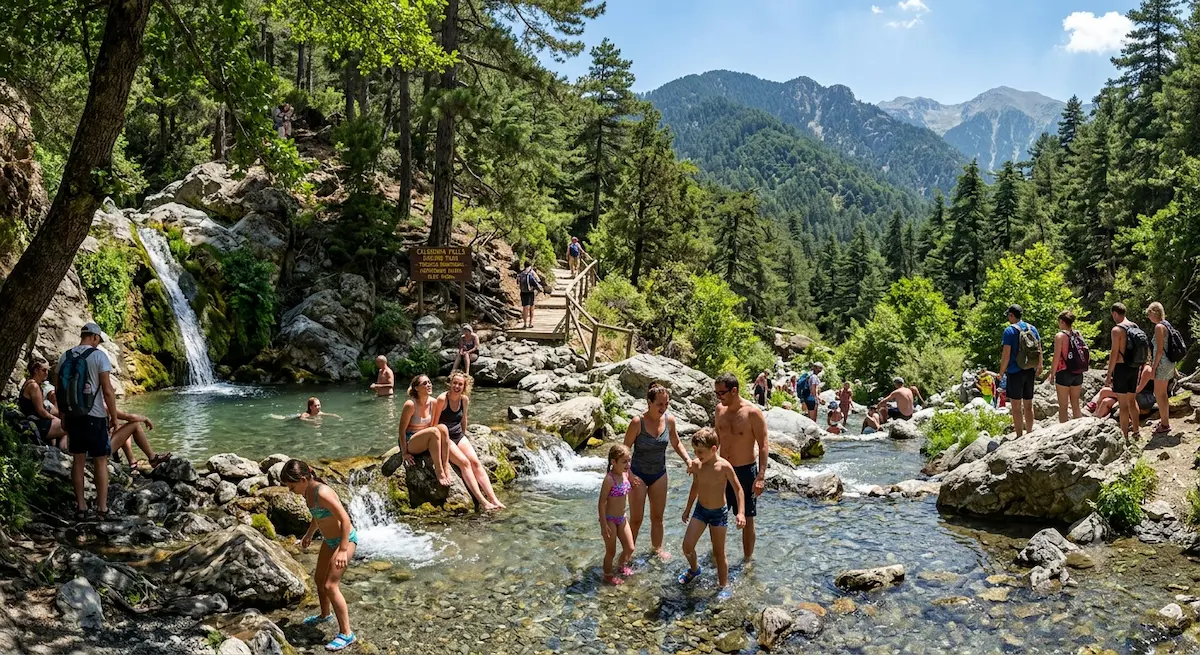
One of the great summer secrets of Troodos is the waterfalls. The Caledonia Waterfall (about 12 metres high) and the Millomeris Waterfall are both accessible via well-marked trails and are at their most enjoyable in summer when the surrounding greenery is lush and the contrast with the coastal heat is sharpest. The walk to Caledonia in particular, through a shaded river gorge, feels almost impossibly refreshing on a hot day.
These trails are shaded almost entirely by the forest canopy, making them ideal even for younger children or older visitors who would not normally attempt a summer hike.
4. Wine Villages and Commandaria Country
The Troodos foothills are home to some of Cyprus’s most productive wine-growing villages — and summer is when the vineyards are at their most photogenic, with heavy clusters of grapes ripening in the mountain sun.
Villages like Omodos, Agios Amvrosios, and Koilani reward slow afternoon visits: cobbled streets, family-run wineries offering tastings of local Maratheftiko and Xinisteri varieties, and of course the famous Commandaria — one of the world’s oldest named wines, still produced in this region.
Combining a wine village tour with a morning hike and a long lunch at a mountain taverna is a genuinely Cypriot summer day — and one that is simply impossible to replicate on the beach.
5. UNESCO Painted Churches — Culture Without the Crowds
The Troodos Mountains are home to ten UNESCO World Heritage-listed Byzantine painted churches, many tucked away in tiny villages or forested valleys. Summer is a good time to visit them because the coastal resorts draw the large tour groups away from the mountain interior, leaving these remarkable buildings remarkably peaceful.
The frescoes inside churches like Agios Nikolaos tis Stegis near Kakopetria or Panagia Forviotissa (Asinou) near Nikitari are extraordinarily well-preserved — an art history experience in a setting that feels completely unlike the tourist trail. Best of all, the thick stone walls mean the interiors stay cool even in the height of summer.
6. Kykkos Monastery — A Mountain Pilgrimage
No summer trip to Troodos is complete without a visit to Kykkos Monastery, the most celebrated and wealthy monastery on the island. The golden mosaics, the museum of Byzantine artefacts, and the commanding position high in the mountains make it a genuinely unmissable stop.
The drive up to Kykkos through the pine-covered ridges is itself one of the most scenic routes in Cyprus, and the viewpoints along the way offer extraordinary panoramas across the entire western half of the island.
7. Village Tavernas Serving the Real Cyprus
This is perhaps underrated as a summer advantage, but mountain tavernas in Troodos operate at a completely different pace to coastal restaurants. In villages like Kakopetria, Platres, and Pedoulas, you will find family-run restaurants serving slow-cooked kleftiko, tava, fresh trout from mountain streams, and loukoumades (honey doughnuts) that have nothing to do with tourist menus.
Sitting under a plane tree in a mountain village square, with a carafe of local wine and a plate of halloumi still warm from the grill, while the temperature hovers around 24 °C — that is the real Cyprus summer experience.
8. Getting There is Easy
One reason Troodos is so underused as a summer destination is the perception that it is hard to reach. In reality, it is very straightforward — and we have a full guide to help. If you are coming from the coast without a car, getting to Troodos from Limassol by bus or car is simpler than many visitors expect, with regular bus connections running directly to Troodos Square.
If you prefer to drive — and driving the mountain roads is genuinely enjoyable — the journey from Limassol takes around 50–55 minutes on winding but well-maintained roads.
9. An Eco-Conscious Way to Travel
If sustainable travel matters to you, Troodos in summer ticks a lot of boxes. The mountain ecosystem is fragile and beautiful, and visiting in summer — when you can explore on foot, support local villages, and stay in small family guesthouses — is one of the most low-impact ways to experience Cyprus.
For a full breakdown of how to visit responsibly, our eco-friendly travel guide to the Troodos Mountains covers everything from trail etiquette to supporting local producers.
Where to Stay in Troodos This Summer
Staying overnight in the mountains transforms the experience entirely — you get the cool evenings, the early morning mist through the pines, and the chance to explore without rushing back to the coast. Accommodation options range from traditional stone guesthouses in Kakopetria to comfortable hotels in Platres and charming rural retreats scattered across the foothills.
Browse available accommodation across the Troodos area — including last-minute availability and competitive rates — through our trusted booking partner:
👉 Find and Book Troodos Accommodation Here
For a handpicked recommendation, the Rifugio Retreat in Kakopetria is our personal favourite — a beautiful garden property in the most charming village in the mountains, with free WiFi and parking, and English-speaking hosts.
Final Thoughts: Why Summer Is Actually the Best Time to Visit Troodos
The Troodos Mountains are often thought of as a winter or spring destination — for the ski slopes, or the spring wildflowers. But summer has its own compelling case: cooler air, lush green forest, waterfalls at their most accessible, open tavernas and wineries, and a striking contrast to the coastal heat that makes the mountains feel like a different country.
If you have never visited Troodos in summer, this is the year to change that. Pack a light layer for the evenings, bring good walking shoes, and give yourself at least a full day — ideally two or three nights — to properly appreciate what this remarkable corner of Cyprus has to offer.
This post contains affiliate links. If you book accommodation or activities through our links, we earn a small commission at no extra cost to you — which helps keep this site running. Thank you for your support!
